Acting
Dorival Caymmi
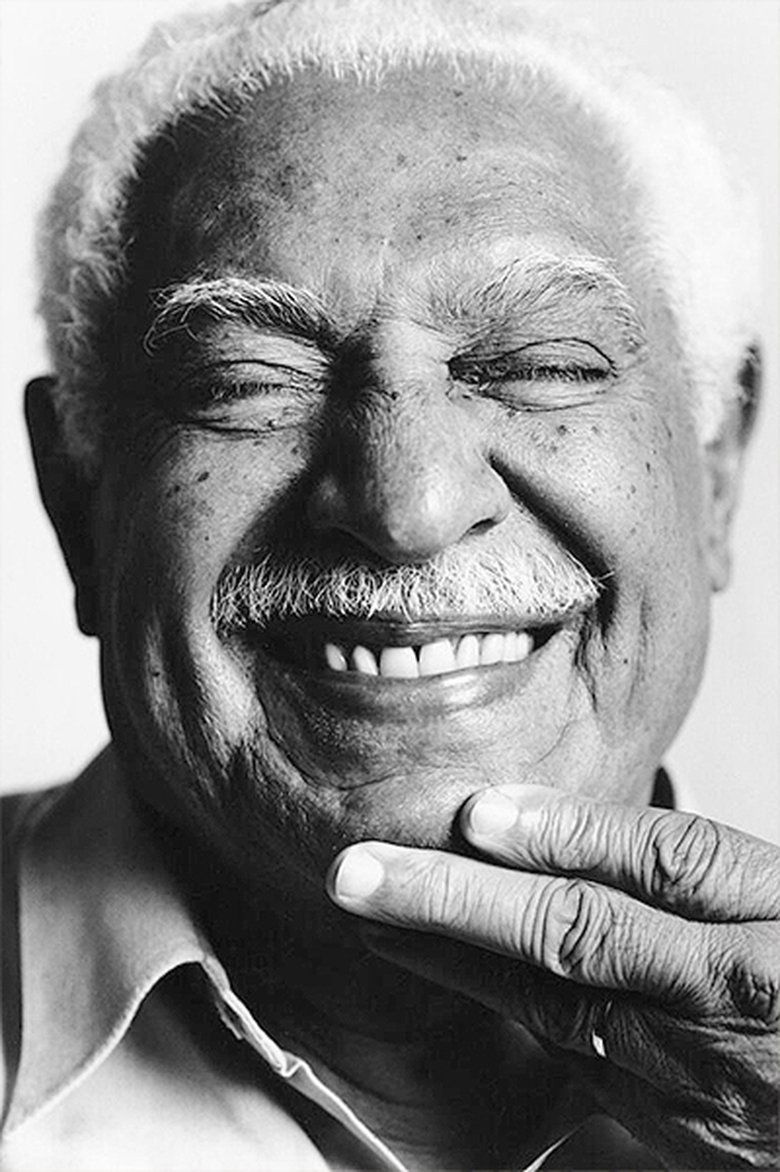
Dorival Caymmi (Salvador, April 30, 1914 – Rio de Janeiro, August 16, 2008) was a Brazilian singer, composer, instrumentalist, poet, painter and actor, active for more than 70 years, beginning in 1933. He contributed to the birth of Brazil's bossa nova movement, and several of his samba pieces, such as "Samba da Minha Terra", "Doralice" and "Saudade da Bahia", have become staples of música popular brasileira. Equally notable are his ballads celebrating the fishermen and women of Bahia, including "Promessa de Pescador", "O Que É Que a Baiana Tem?", and "Milagre". Caymmi composed about 100 songs in his lifetime, and many of his works are now considered to be Brazilian classics. Both Brazilian and non-Brazilian musicians have covered his songs. Ben Ratliff of The New York Times wrote that Caymmi was "perhaps second only to Antônio Carlos Jobim in 'establishing a songbook of [the 20th] century's Brazilian identity." Throughout his career, his music about the people and culture of Bahia influenced Brazil's image in the eyes of both Brazilians and foreigners. Caymmi was married to Brazilian singer Stella Maris for 68 years, and the couple's children, Dori, Danilo, and Nana, are also prominent musicians. Each debuted professionally by accompanying Caymmi onstage and in recordings. In 2014, Caymmi's granddaughter Alice also began a musical career. Caymmi was born in Salvador, Bahia, to Durval Henrique Caymmi, the great-grandson of an Italian immigrant, and Aurelina Soares Caymmi, a native Bahian. He had two younger sisters, Dinahir and Dinah, and a younger brother, Deraldo. His father, a civil servant, often played the piano, guitar, and mandolin at home, and his mother, a housewife, sang regularly. He participated in his church's choir for much of his childhood. At age 13, he left school to work as a journalist at Bahian newspaper O Imparcial. When O Imparcial went out of business two years later, he took up work as a street vendor. Although he never formally studied music, Caymmi taught himself to play guitar in the late 1920s and began to compose, sing, and play his own songs on Bahian radio programs around 1930. He first achieved widespread recognition in 1933, when he composed the song "O Que É Que a Baiana Tem?" ("What Is It About Bahian Women?") for singer Carmen Miranda. In 1936, at age 22, he won a songwriting contest at Salvador's annual Carnaval celebration. His prize was a pink satin lampshade. Despite his early musical success, he moved to Rio de Janeiro in 1938 with intentions to pursue a law degree and to return to working as a journalist. While employed there by the newspaper Diários Associados, he spent his spare time composing and singing songs on the radio show Dragão da Rua Larga. His popularity began to grow with the show's audience. ... Source: Article "Dorival Caymmi" from Wikipedia in English, licensed under CC-BY-SA 3.0.
Filmography
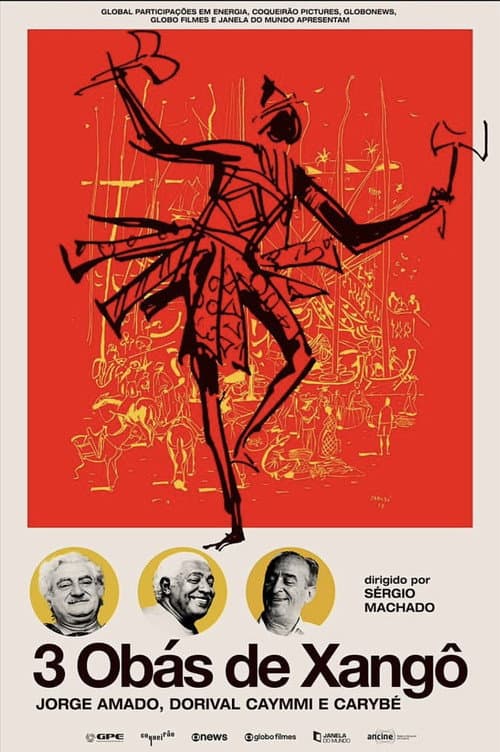
3 Obás de Xangô
Film · 2025

Dorival Caymmi - Um Homem de Afetos
Film · 2024

Nas Ondas de Dorival Caymmi
Film · 2024
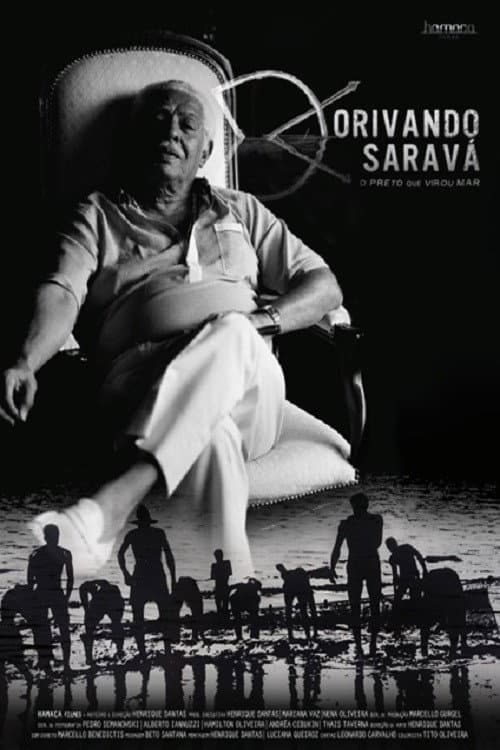
Dorivando Saravá, o Preto Que Virou Mar
Film · 2019

Dê Lembranças a Todos
Film · 2018

Paulo Gracindo - O Bem Amado
Film · 2009

A Casa do Tom: Mundo, Monde, Mondo
Film · 2007

Taking a Chance on Love: Jane Monheit in Concert
Film · 2005

Celebrity
Series · 2003
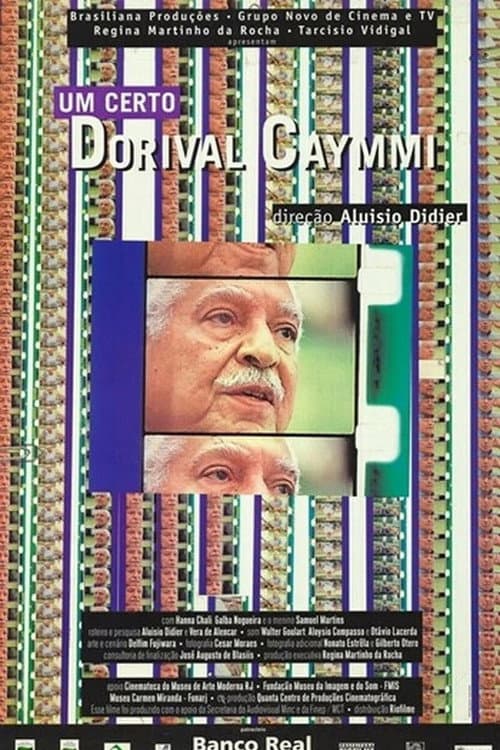
Um Certo Dorival Caymmi
Film · 2002

Samba Riachão
Film · 2001

Celebração - 100 Anos do Cinema Nacional
Film · 1997
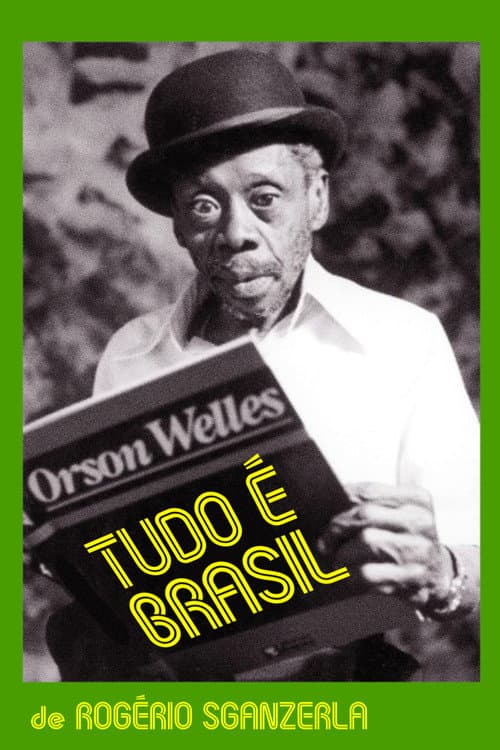
It's All Brazil
Film · 1997

Bahia de Todos os Sambas
Film · 1996

A Embaixatriz do Samba
Film · 1991
Nosso Amigo Radamés Gnattali
Film · 1991

Talking Cinema
Film · 1986

Brasil
Film · 1981

Caterina Valente presents Brazilian music
Film · 1979
Na Casa de Rio Vermelho
Film · 1974

Dorival Caymmi: Programa Ensaio
Film · 1972

The Sandpit Generals
Film · 1972

Le Grand Échiquier
Series · 1972

Bahia, For Example
Film · 1969

The Girl from Ipanema
Film · 1967
Estrela da Manhã
Film · 1950

Banana-da-Terra
Film · 1939